When you’re juggling kids, laundry, meal prep, and a never-ending to-do list, the last thing you want to worry about is hidden dangers in your home. But one area that often gets overlooked is hot water safety. Scalds can happen in seconds, especially with little ones who love to explore. Here’s what every mom should know about keeping bath time (and your home) safe.
Set Your Water Heater to a Safe Temperature
The U.S. Consumer Product Safety Commission recommends setting your water heater to 120°F (49°C). At 140°F, it takes just 5 seconds for a serious burn. At 120°F, it takes 5 minutes for the same injury. That small adjustment could make a huge difference in keeping curious hands and tender skin safe.
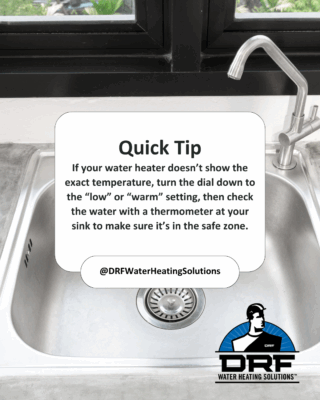
Bath Water Temperature for Kids
For babies and young children, the safest bath water temperature is about 100°F (37–38°C)—close to body temperature. Too hot and you risk burns. Too cold and you’ll have an unhappy, shivering toddler on your hands.
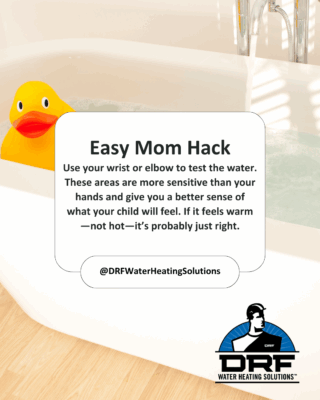
#bath_time_safety_for_moms
For added peace of mind, inexpensive bath thermometers shaped like cute ducks or turtles can give you an exact reading.
Quick Ways to Test Your Bath Water
The Elbow Test: Dip your elbow into the water. If it feels comfortably warm (not hot), it’s safe.
Floating Bath Thermometer: Many are digital or color-changing and double as toys.
Kitchen Thermometer: Not glamorous, but accurate. Just remember to sanitize it afterward!
Safety Locks & Faucet Protectors
Yes, there are child-safety products designed to help with hot water safety:
Anti-scald devices: Install on faucets and showerheads to automatically limit water temperature.
Faucet covers: Soft, often shaped like animals, to protect kids from bumps and sometimes with built-in spouts that regulate flow.
Shower handle locks: Prevent curious kids from turning on hot water themselves.
These small investments can give you peace of mind, especially if you’ve got a little Houdini who loves to play with knobs and handles.
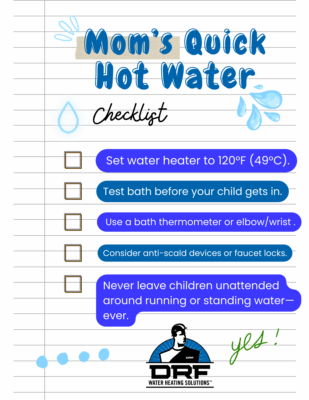
#moms_quick_hot_water_checklist
Final Thoughts
When it comes to hot water safety, bath time should be about rubber duckies, giggles, and making memories—not worrying about burns. With a few quick tweaks, you can create a safe, cozy routine that keeps everyone happy (and keeps you from one more worry on your plate).
From all your local plumbers at DRF Water Heating Solutions
When you’re juggling kids, laundry, meal prep, and a never-ending to-do list, the last thing you want to worry about is hidden dangers in your home. But one area that often gets overlooked is hot water safety. Scalds can happen in seconds, especially with little ones who love to explore. Here’s what every mom should know about keeping bath time (and your home) safe.
Set Your Water Heater to a Safe Temperature
The U.S. Consumer Product Safety Commission recommends setting your water heater to 120°F (49°C). At 140°F, it takes just 5 seconds for a serious burn. At 120°F, it takes 5 minutes for the same injury. That small adjustment could make a huge difference in keeping curious hands and tender skin safe.
Bath Water Temperature for Kids
For babies and young children, the safest bath water temperature is about 100°F (37–38°C)—close to body temperature. Too hot and you risk burns. Too cold and you’ll have an unhappy, shivering toddler on your hands.
#bath_time_safety_for_moms
For added peace of mind, inexpensive bath thermometers shaped like cute ducks or turtles can give you an exact reading.
Quick Ways to Test Your Bath Water
The Elbow Test: Dip your elbow into the water. If it feels comfortably warm (not hot), it’s safe.
Floating Bath Thermometer: Many are digital or color-changing and double as toys.
Kitchen Thermometer: Not glamorous, but accurate. Just remember to sanitize it afterward!
Safety Locks & Faucet Protectors
Yes, there are child-safety products designed to help with hot water safety:
Anti-scald devices: Install on faucets and showerheads to automatically limit water temperature.
Faucet covers: Soft, often shaped like animals, to protect kids from bumps and sometimes with built-in spouts that regulate flow.
Shower handle locks: Prevent curious kids from turning on hot water themselves.
These small investments can give you peace of mind, especially if you’ve got a little Houdini who loves to play with knobs and handles.
#moms_quick_hot_water_checklist
Final Thoughts
When it comes to hot water safety, bath time should be about rubber duckies, giggles, and making memories—not worrying about burns. With a few quick tweaks, you can create a safe, cozy routine that keeps everyone happy (and keeps you from one more worry on your plate).
From all your local plumbers at DRF Water Heating Solutions